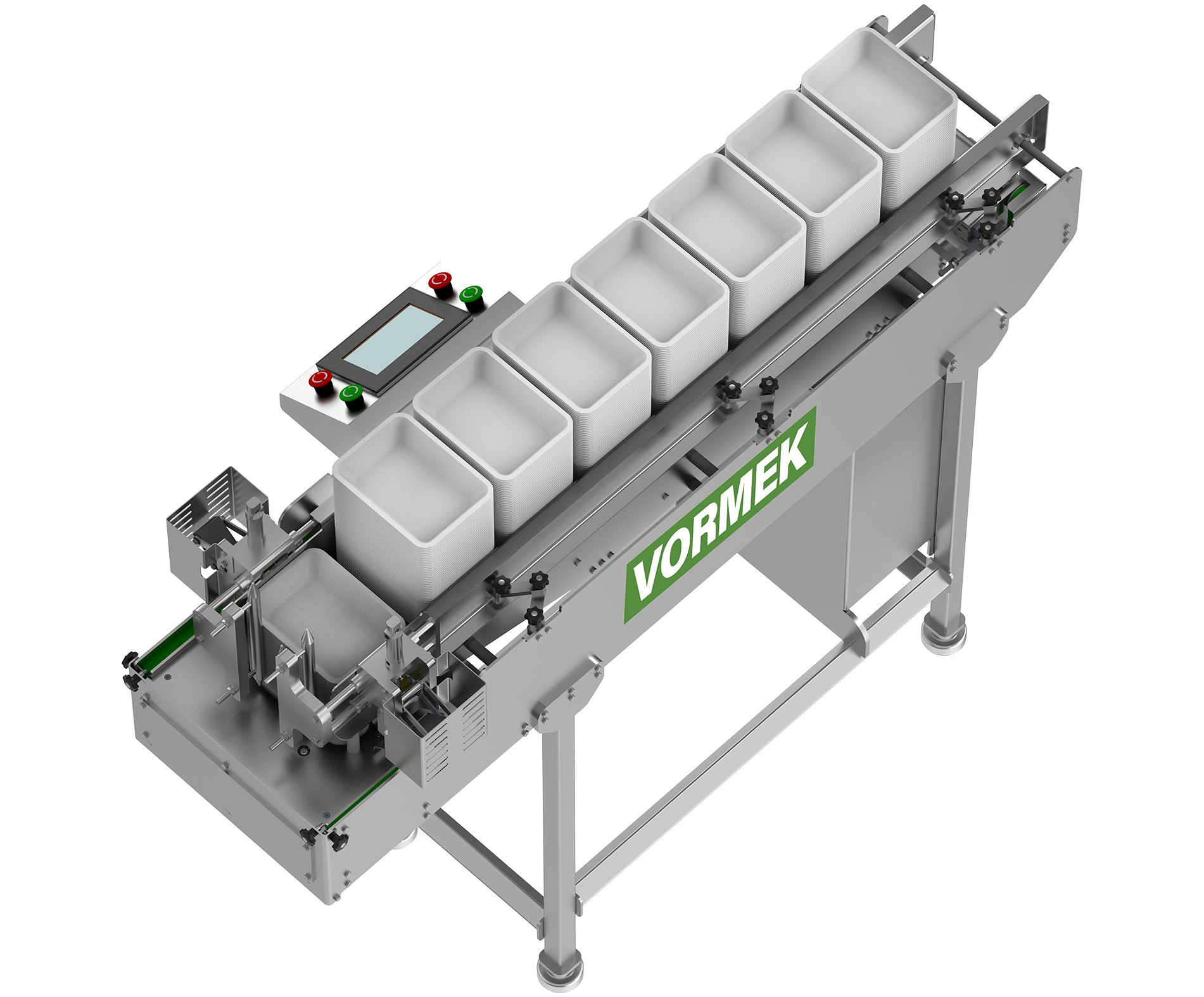
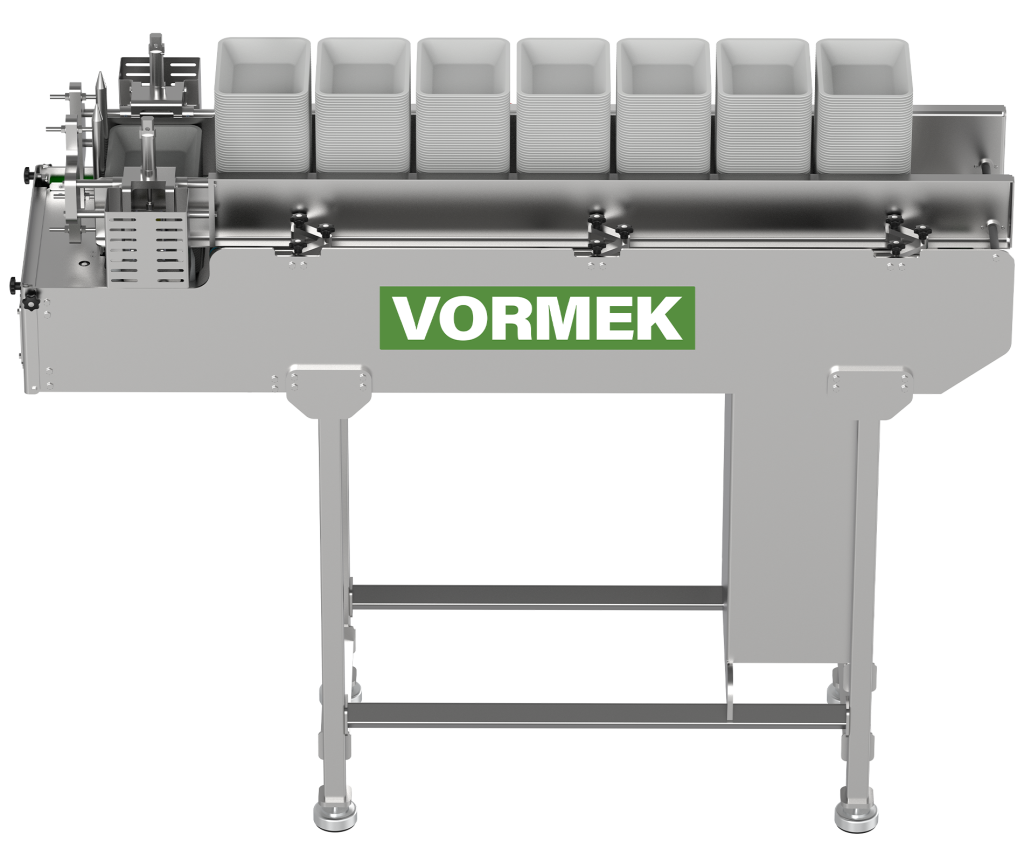
Pengantar Vormek TrayFlow VES-510
Pengemasan tidak lagi sekedar menjaga kelestarian produk. Saat ini, ini adalah bagian dari identitas merek, alat untuk membuktikan kualitas, dan tanda kepatuhan terhadap standar kebersihan. Ketika jalur produksi menjadi lebih cepat, menghilangkan campur tangan manusia dan menyerahkan tugas ke sistem yang otomatis dan tepat telah menjadi kebutuhan yang tidak dapat disangkal.
Di antara semua stasiun pada lini pengemasan, penempatan kontainer pada saluran masuk selalu menjadi potensi hambatan. Banyak pabrik yang masih bergantung pada operator untuk tugas ini—sebuah metode yang mengurangi kecepatan, membahayakan kebersihan, menambah biaya, dan menghasilkan kesalahan berulang.
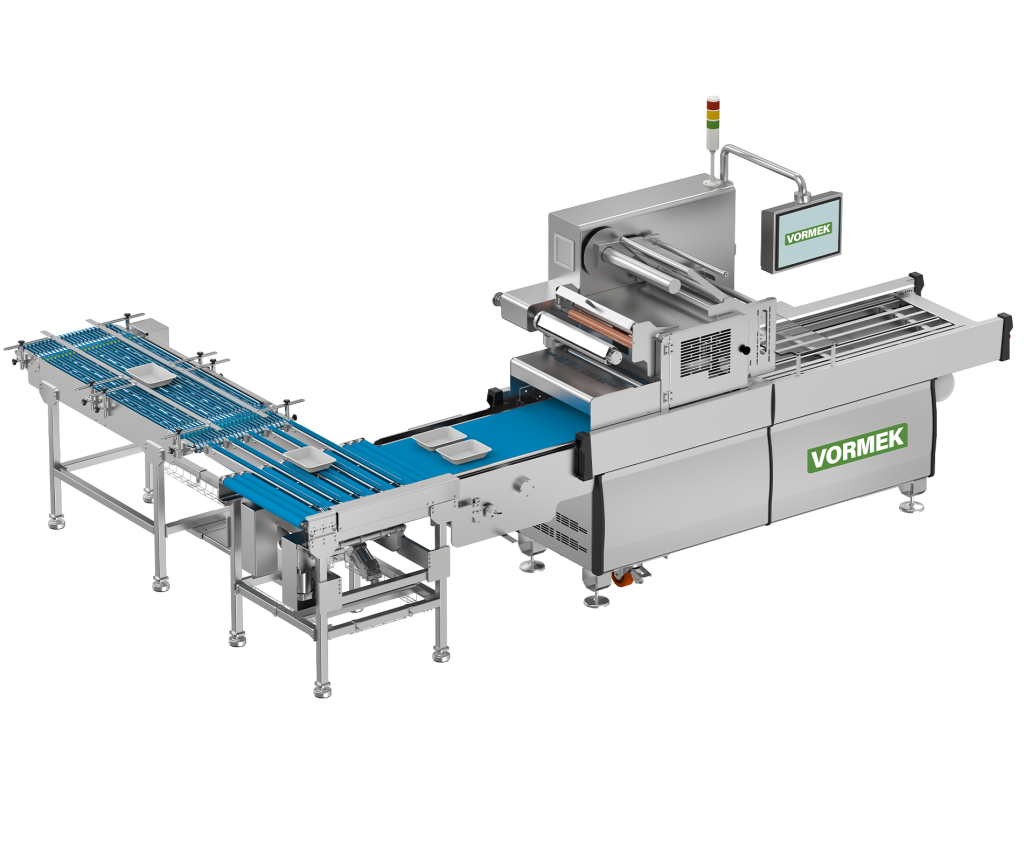
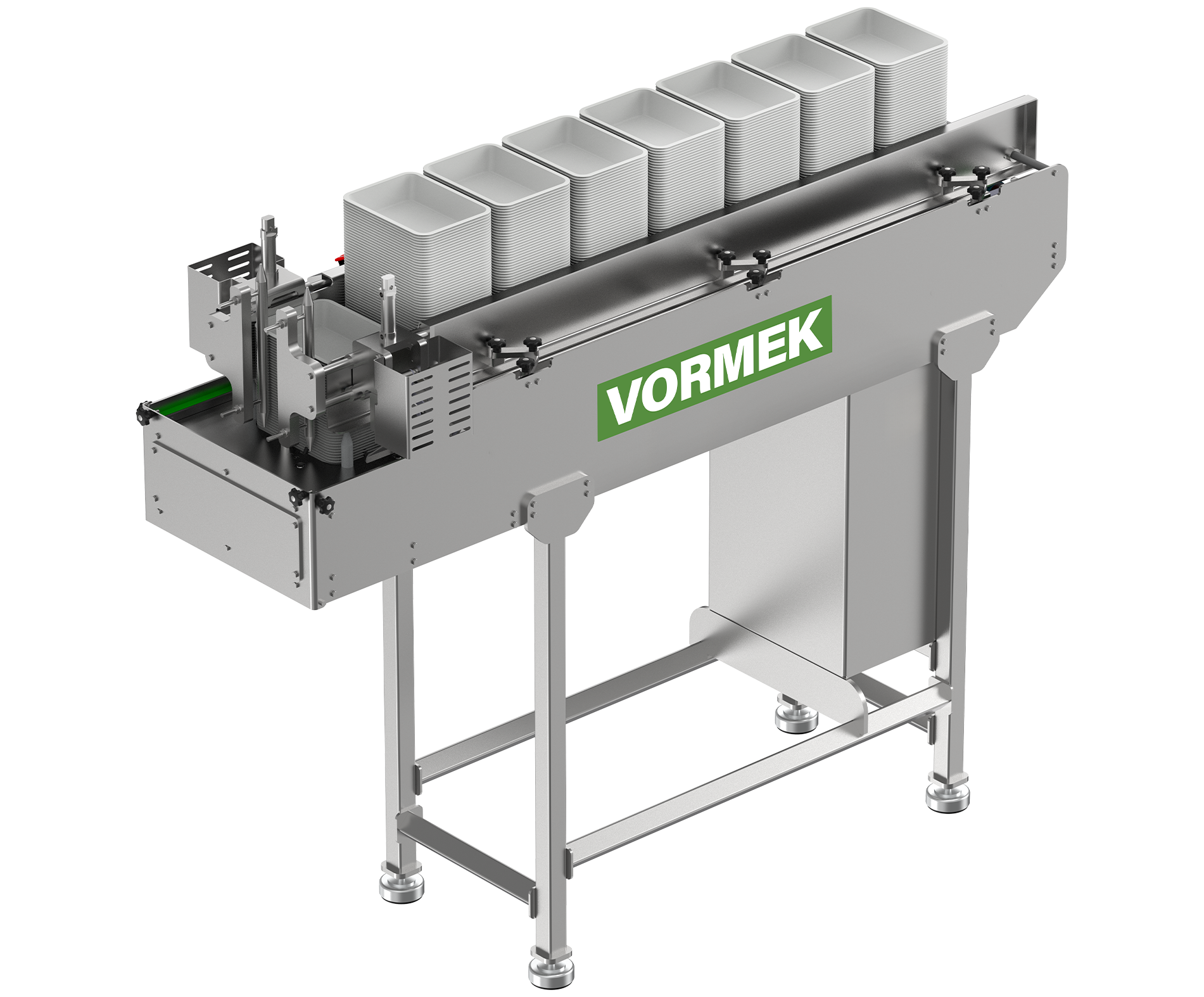
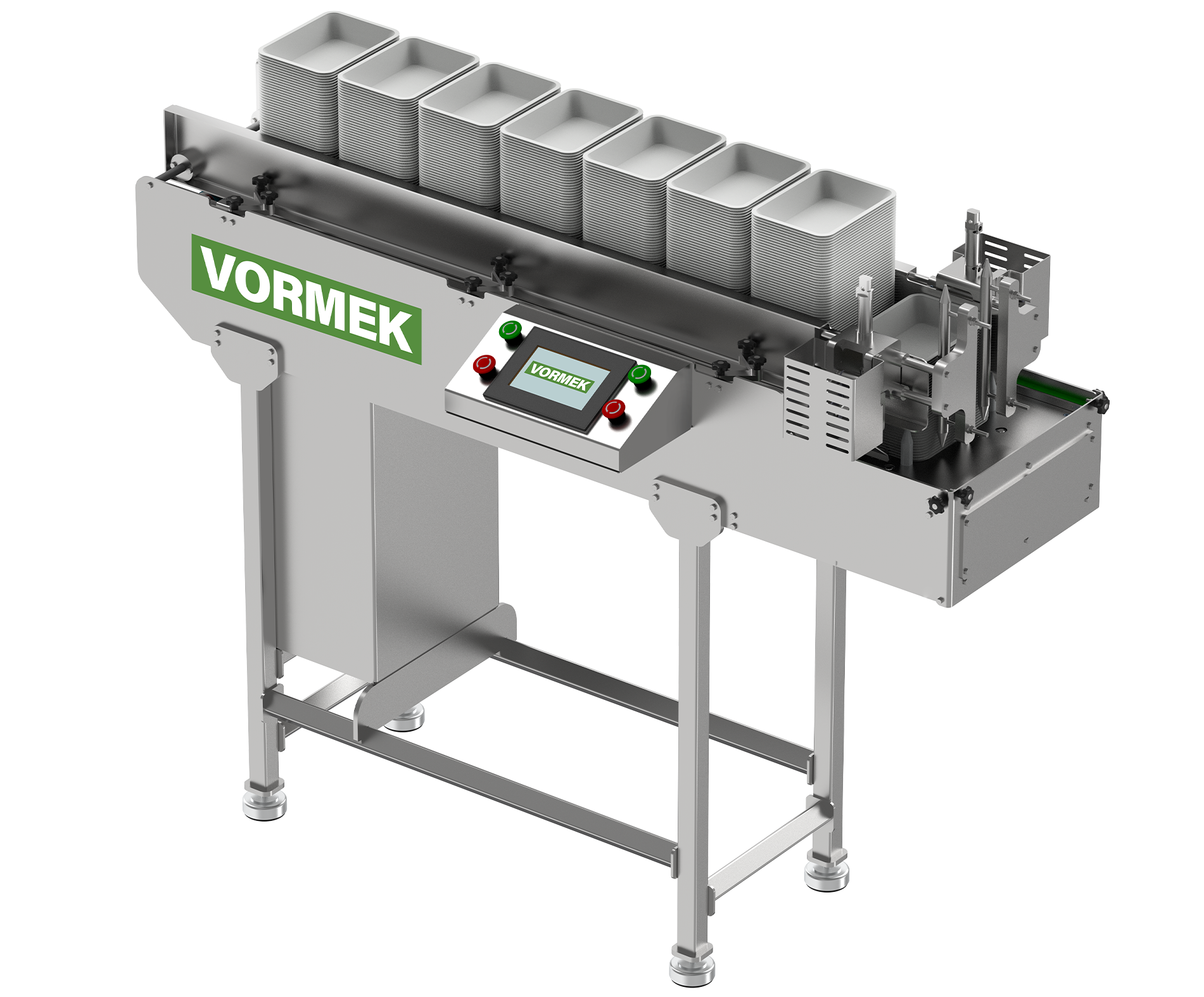
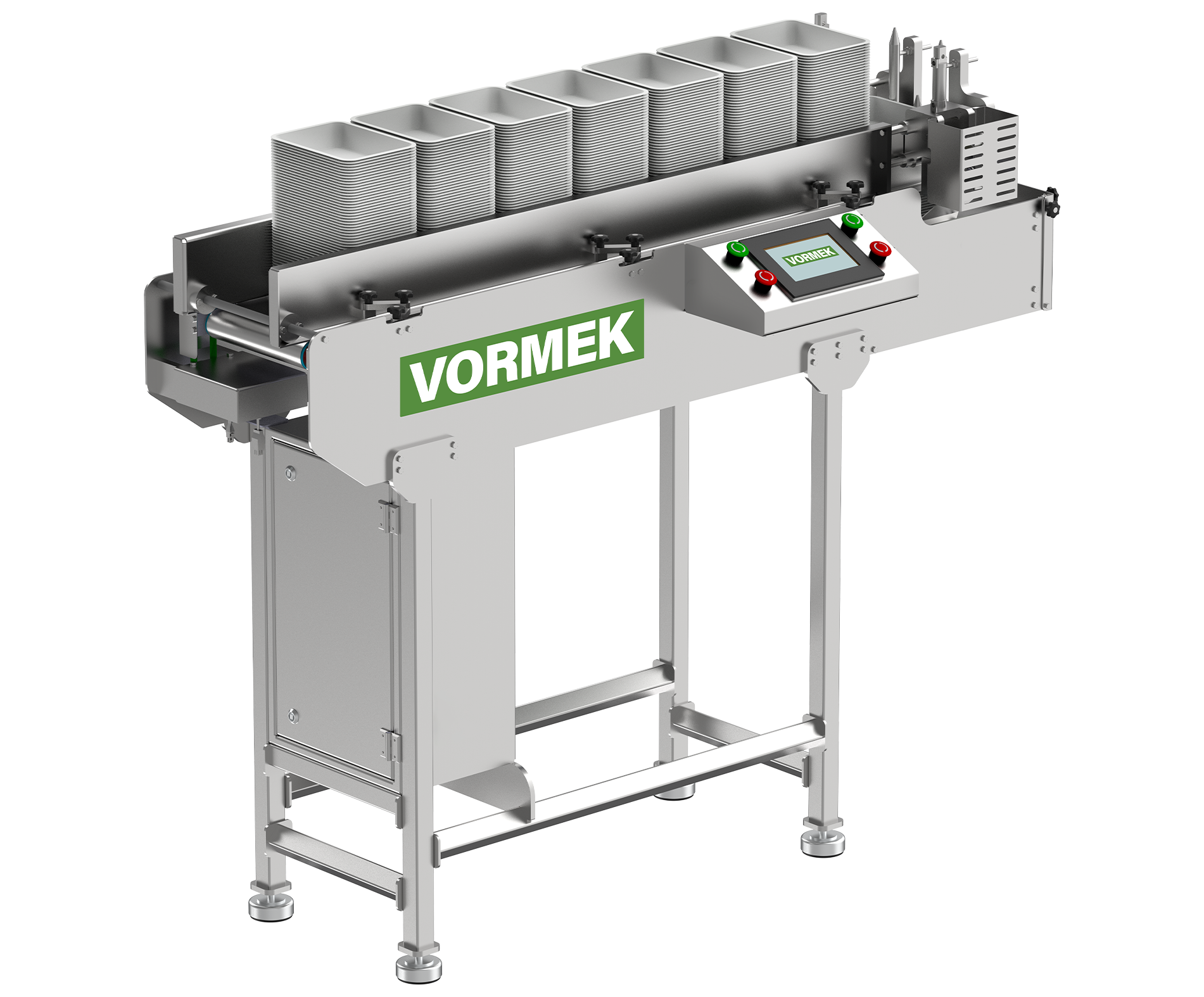
ItuAliran Baki VES-510adalah mesin denesting otomatis yang digerakkan oleh servo—sebuah respons terhadap salah satu kebutuhan mendasar lini pengemasan modern. Dilengkapi motor servo, mekanisme sekrup, sistem pra-pemisahan berbasis cam, dan kontrol PLC yang cerdas, alat ini memisahkan wadah satu per satu dengan presisi tinggi, disinkronkan dengan kecepatan saluran, dan menempatkannya ke dalam pengumpan penyegel baki.
VES-510 bukan sekedar denester. Ini adalah mata rantai cerdas dalam rantai otomasi—yang memungkinkan produsen meningkatkan produktivitas, mencapai standar kebersihan, dan mengurangi biaya pengoperasian.
Apa itu Denester Otomatis Berbasis Servo?
Denester otomatis yang digerakkan oleh servo adalah peralatan industri yang dirancang untuk memisahkan wadah plastik bertumpuk dan menempatkannya satu per satu ke jalur pengemasan atau penyegel baki. Proses ini mungkin tampak sederhana, namun dalam praktiknya, ini adalah salah satu poin paling penting dalam lini pengemasan. Bahkan kesalahan kecil dalam pemisahan, penempatan yang tidak tepat, atau pengumpanan beberapa wadah secara bersamaan dapat menyebabkan terhentinya jalur, peningkatan limbah, dan penurunan kualitas kemasan.
ItuVES-510dirancang untuk memecahkan tantangan-tantangan ini.
Arsitektur Teknik
Mesin ini terdiri dari beberapa bagian utama, yang masing-masing memainkan peran penting dalam kinerjanya secara keseluruhan.
| # | Spesifikasi | Detail |
|---|---|---|
| 1 | Tipe Mesin | Denester otomatis yang digerakkan oleh servo |
| 2 | Sistem Pemisahan | Denesting tersinkronisasi berbasis sekrup (empat sisi) |
| 3 | Mekanisme Pra-Pemisahan | Mekanisme cam untuk melonggarkan wadah sebelum masuknya sekrup |
| 4 | Konveyor Pakan | Kapasitas minimal 8 tumpukan kontainer; aktif secara otomatis ketika jumlah tumpukan berkurang |
| 5 | Memegang Senjata | Dua lengan dengan silinder pneumatik untuk mencegah jatuhnya tumpukan dan guncangan secara tiba-tiba |
| 6 | Jumlah Motor Servo | 2 unit independen (satu untuk konveyor umpan, satu untuk sistem sekrup) |
| 7 | Sistem Pengendalian | Layar sentuh PLC Industri + HMI |
| 8 | Sensor dan Microswitch | Jaringan sensor penuh untuk deteksi kontainer, kontrol posisi, keamanan, dan umpan balik PLC |
| 9 | Kandang Listrik | Mandiri, dengan akses mudah untuk servis dan pemeliharaan |
| 10 | Badan Mesin | Baja tahan karat 304 penuh (dapat dicuci, tahan korosi) |
| 11 | Ban berjalan | Kelas makanan PU |
| 12 | Bahan Perkakas | Paduan aluminium dengan lapisan pelindung (tahan deterjen) |
| 13 | Pergantian Cepat | Ya – cepat dan mudah |
| 14 | Penyesuaian untuk Kontainer Berbeda | Ya (dengan penggantian perkakas, rel pengumpan, pemandu, dan penyetelan stop) |
| 15 | Kecepatan Operasi | Hingga 60 kontainer per menit (dapat disesuaikan) |
| 16 | Kondisi Lingkungan | Tahan terhadap kelembapan, deterjen, dan pencucian industri |
| 17 | Kepatuhan Kebersihan | Siap HACCP, ISO 22000, dan GMP |
| 18 | Sistem Diagnostik | Ya – alarm dan kesalahan ditampilkan di HMI |
Konveyor Pakan
Pada bagian pengumpanan mesin, konveyor dirancang untuk menampung setidaknya delapan tumpukan kontainer secara bersamaan. Kapasitas penyimpanan ini memungkinkan operator memuat kontainer dalam jumlah besar sekaligus, sehingga alat berat dapat terus beroperasi tanpa gangguan.
Setiap kali jumlah kontainer di magazine berkurang, konveyor secara otomatis aktif dan memindahkan tumpukan baru ke posisi pemuatan. Fitur ini memastikan proses pemberian makan yang berkesinambungan dan tidak terputus.
Lengan Penahan Pneumatik – Mencegah Guncangan dan Kerusakan
Masalah umum pada mesin denesting adalah tumpukan kontainer yang terjatuh secara tiba-tiba satu sama lain. Pada VES-510, dua lengan penahan yang dilengkapi silinder pneumatik diposisikan di kedua sisi alat berat untuk mencegah masalah ini.
Lengan-lengan ini:
- Kontrol berat tumpukan kontainer
- Cegah tetesan tiba-tiba
- Posisikan wadah dengan hati-hati
- Mencegah kerusakan pelek pada wadah
Mekanisme Cam – Solusi untuk Stuck Container
Salah satu tantangan tersulit dalam pembuatan sarang otomatis adalah memisahkan wadah yang terkunci karena geometri atau sifat materialnya. Insinyur Vormek telah mengembangkan mekanisme canggih berbasis kamera untuk mengatasi masalah ini.
Sebelum kontainer masuk ke bagian sekrup, sistem ini:
- Menerapkan tekanan terkontrol ke pelek kontainer
- Melonggarkan wadah yang tersangkut satu sama lain
- Menciptakan celah yang diperlukan untuk pemisahan wadah tunggal
- Mencegah beberapa kontainer memasuki sistem sekrup secara bersamaan
Tahap ini memainkan peran penting dalam stabilitas operasional alat berat, memastikan bahwa kontainer yang bertumpuk rapat sekalipun dapat dipisahkan tanpa masalah.
Inti dari Mesin – Sistem Sekrup
Inti dari VES-510 adalah sistem sekrupnya. Setelah wadah ditempatkan di dalam magasin, empat sekrup—satu di setiap sisi wadah—terpasang pada tepi wadah. Sekrup ini bergerak dalam sinkronisasi sempurna, dengan lembut mencengkeram tepi wadah.
Prosesnya:
- Wadah pertama dipisahkan dari tumpukannya
- Wadah dipandu menuju outlet
- Wadah selanjutnya disiapkan untuk pemisahan
Proses ini dilakukan tanpa benturan, tanpa tenaga berlebihan, dan dengan presisi tertinggi. Berbeda dengan sistem tradisional, tidak ada kekuatan mendadak atau dampak mekanis.
Tenaga Motor Servo – Presisi dalam Setiap Gerakan
Keunggulan teknis VES-510 terletak pada sistem servo penuhnya—menghadirkan presisi dan fleksibilitas. Mesin ini dilengkapi dengan dua motor servo independen:
- Motor Servo 1:Mengontrol konveyor umpan
- Motor Servo 2:Mengontrol sistem sekrup dan proses pemisahan
Manfaat Motor Servo:
- Penyesuaian kecepatan yang tepat
- Kontrol posisi akurasi tinggi
- Gerakan halus dan bebas benturan
- Mengurangi keausan komponen
- Sinkronisasi penuh dengan kecepatan saluran
- Kecepatan instan menambah atau mengurangi kemampuan
Operator dapat menyesuaikan alat berat secara tepat agar sesuai dengan kapasitas produksi.
Sistem Kontrol Cerdas
Dalam peralatan industri modern, kualitas pengendalian seringkali lebih penting daripada tenaga mekanik. VES-510 dilengkapi sistem kontrol canggih termasuk:
- PLC Industri
- Layar sentuh HMI
- Sistem penyesuaian parameter
- Sistem manajemen kecepatan
- Diagnosis kesalahan yang cerdas
- Tampilan alarm dan kesalahan
Semua komponen kelistrikan dan kontrol ditempatkan dalam selungkup listrik independen. Desain ini meningkatkan keselamatan dan menyederhanakan perawatan.
Sensor – Mata Cerdas Mesin
Pengoperasian yang tepat tidak mungkin dilakukan tanpa jaringan sensor dan sakelar mikro yang dipasang di berbagai titik pada VES-510. Komponen-komponen ini:
- Mendeteksi keberadaan kontainer
- Posisi mekanisme kontrol
- Kirim umpan balik ke PLC
- Mencegah kesalahan
- Lindungi operator
- Pastikan keamanan mesin
Jaringan sensor memastikan pemantauan penuh terhadap alat berat di semua tahap pengoperasian.
Pergantian Perkakas Cepat
Banyak pabrik saat ini memproduksi berbagai produk dalam wadah yang berbeda. Fleksibilitas sangat penting. Pada VES-510, pergantian perkakas sangatlah sederhana:
- Pasang perkakas yang sesuai
- Sesuaikan rel masuk
- Sesuaikan pemandu konveyor
- Tetapkan perhentian agar sesuai dengan wadah baru
Mesin ini dapat menampung berbagai macam wadah berbentuk bulat, persegi panjang, dan lainnya.
Manfaat Higienis
Dalam industri makanan, farmasi, dan susu, kebersihan bukanlah suatu pilihan—hal ini merupakan suatu keharusan. Dengan sepenuhnya menghilangkan kontak tangan dengan interior kontainer, VES-510 memberikan:
- Mengurangi beban mikroba
- Pencegahan kontaminasi sekunder
- Peningkatan keamanan produk
- Dukungan untuk kepatuhan HACCP
- Sertifikasi mutu yang lebih mudah
Sejak kontainer dimuat hingga ditempatkan pada penyegel baki, tidak ada kontak tangan manusia dengan bagian dalam kontainer.
Manfaat Ekonomi
Berinvestasi dalam otomatisasi memberikan nilai ketika menghasilkan ROI yang terukur. VES-510 mengurangi biaya produksi melalui:
- Mengurangi tenaga kerja– Banyak jalur yang hanya memerlukan 2–4 operator untuk melakukan denesting
- Mengurangi limbah– Penempatan yang tepat mengurangi penghentian lini dan produk cacat
- Peningkatan kapasitas– Jalur dapat beroperasi pada kecepatan yang lebih tinggi
- Mengurangi biaya kebersihan– Menurunkan risiko kontaminasi dan biaya terkait
ROI biasanya terjadi dalam waktu 6–12 bulan.
Industri yang Cocok
VES-510 cocok untuk berbagai industri:
| Industri | Aplikasi |
|---|---|
| Makanan | Makanan siap saji, salad, sup, produk setengah jadi |
| Protein | Daging merah, unggas, ikan, makanan laut |
| Produk susu | Yogurt, krim keju, makanan penutup berbahan dasar susu |
| Pertanian | Sayuran siap saji, buah-buahan kemasan |
| Farmasi | Wadah steril, produk medis dan laboratorium |
Kesimpulan
ItuAliran Baki VES-510mewakili konvergensi teknik mesin, otomasi industri, dan persyaratan kebersihan dalam lini pengemasan modern. Konveyor cerdas, lengan penahan pneumatik, mekanisme pra-pemisahan bubungan, sistem sekrup, dua motor servo independen, dan kontrol PLC cerdas bekerja sama untuk membuat proses pembuatan menjadi sepenuhnya otomatis, cepat, dan tanpa gangguan.
Bagi produsen yang menginginkan peningkatan kapasitas, penghapusan kesalahan manusia, pengurangan biaya operasional, dan peningkatan standar kebersihan, VES-510 bukan sekadar aksesori—tetapi merupakan langkah signifikan menuju lini pengemasan yang lebih cerdas dan berkelanjutan.
Dalam industri di mana setiap detik adalah modal dan setiap kontak tangan merupakan ancaman terhadap keamanan produk, VES-510 mengambil langkah pertama dalam pengemasan dengan stabilitas sehingga kepercayaan tetap berada pada produsen hingga tahap terakhir.
Pertanyaan Umum Teknis
| # | Pertanyaan | Menjawab |
|---|---|---|
| 1 | Apakah mesin ini kompatibel dengan semua model penyegel baki? | Ini dirancang khusus untuk penyegel baki Vormek, dengan jumlah rongga yang sesuai dengan cetakan penyegel baki. Untuk merek lain, diperlukan verifikasi teknis kasus per kasus. |
| 2 | Berapa kecepatan maksimum dalam kontainer per menit? | Mesin ini dapat memisahkan dan menempatkan hingga 60 kontainer per menit. Kecepatan dapat disesuaikan berdasarkan jenis kontainer dan kapasitas jalur. |
| 3 | Bisakah mesin menangani bentuk wadah yang berbeda? | Ya. Dengan penggantian perkakas, penyetelan rel masuk, penyetelan pemandu konveyor, dan setelan penghentian, alat ini menangani bentuk bulat, persegi panjang, dan berbagai bentuk lainnya. |
| 4 | Apa yang terjadi jika majalah kehabisan wadah? | Mesin memperingatkan operator, yang harus mengisi ulang magasin dengan tumpukan baru. Jalur ini dapat terus menggunakan kontainer yang sudah ada di infeed. |
| 5 | Apakah mesin dapat dicuci dalam kondisi basah dengan bahan pembersih yang kuat? | Ya. Bodi baja tahan karat 304 dan komponen paduan aluminium berlapis tahan terhadap deterjen industri dan kelembapan. Mesin ini bisa dicuci sepenuhnya. |
| 6 | Apakah suku cadang tersedia? | Ya. Sebagai produsen, Vormek memberikan dukungan teknis penuh dan pasokan suku cadang. Desain modularnya juga menyederhanakan servis dan penggantian komponen. |
| 7 | Berapa lama waktu yang dibutuhkan untuk pergantian perkakas? | Bergantung pada ukuran dan kerumitan perkakas, pergantian biasanya memerlukan waktu 10–15 menit. Dengan latihan, operator dapat mengurangi waktu tersebut. |
| 8 | Bisakah mesin terhubung ke sistem otomasi pusat pabrik? | Ya. Mesin ini dilengkapi dengan PLC industri yang mampu terhubung ke sistem tingkat yang lebih tinggi. SCADA dan integrasi sistem pusat pabrik tersedia berdasarkan permintaan. |
| 9 | Berapa jumlah minimum kontainer per tumpukan? | Mesin ini dirancang untuk tumpukan kontainer dengan ketinggian standar. Ketinggian tumpukan minimum tergantung pada ketebalan dan bahan wadah, ditentukan selama penyesuaian. |