Pengantar Vormek Converix VLM-500
Peningkatan kapasitas produksi secara konsisten menghadirkan tantangan baru dalam transfer produk. Banyak penyegel baki otomatis, dirancang untuk mencapai keluaran yang lebih tinggi, pengemasan dan pembuangan produk dalam dua atau lebih jalur paralel. Meskipun metode ini meningkatkan efisiensi pengemasan, peralatan hilir—seperti pelabel otomatis, printer jet, sistem kendali mutu, checkweigher, pembuat karton, dan robot pembuat palet—biasanya memerlukan masukan produk satu file dengan jarak yang seragam.
Akibatnya, banyak pabrik yang masih mengandalkan tenaga kerja manual untuk mengubah keluaran multi jalur menjadi satu jalur. Hal ini menciptakan kemacetan, meningkatkan biaya, dan menimbulkan risiko kontaminasi.
Pada saat yang sama, keterbatasan ruang fisik di banyak fasilitas membuat perluasan secara garis lurus (in-line) tidak mungkin dilakukan. Dalam kasus seperti itu, teknologi yang secara bersamaan dapat melakukan penggabungan jalur dan perubahan arah sangatlah penting.
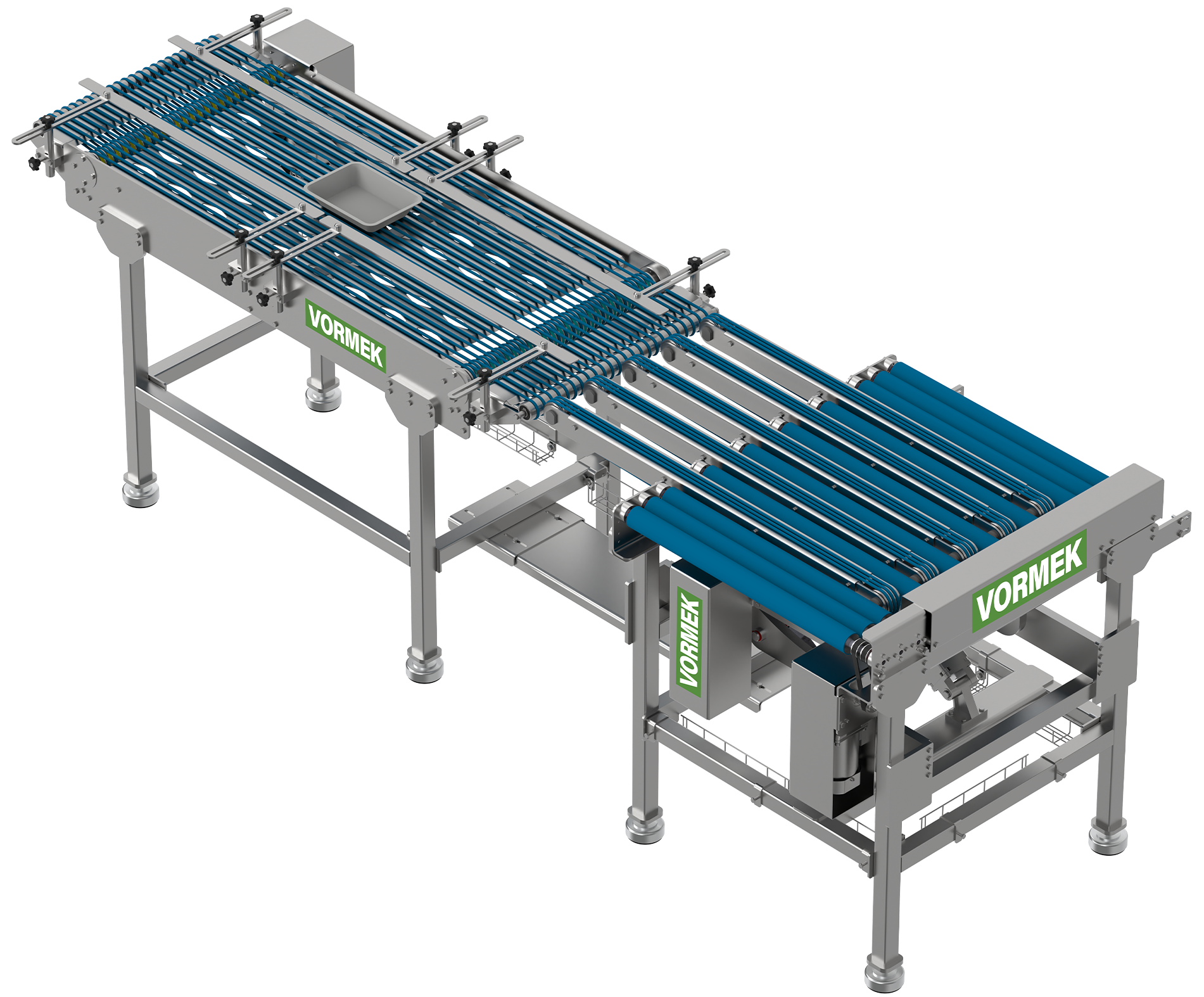
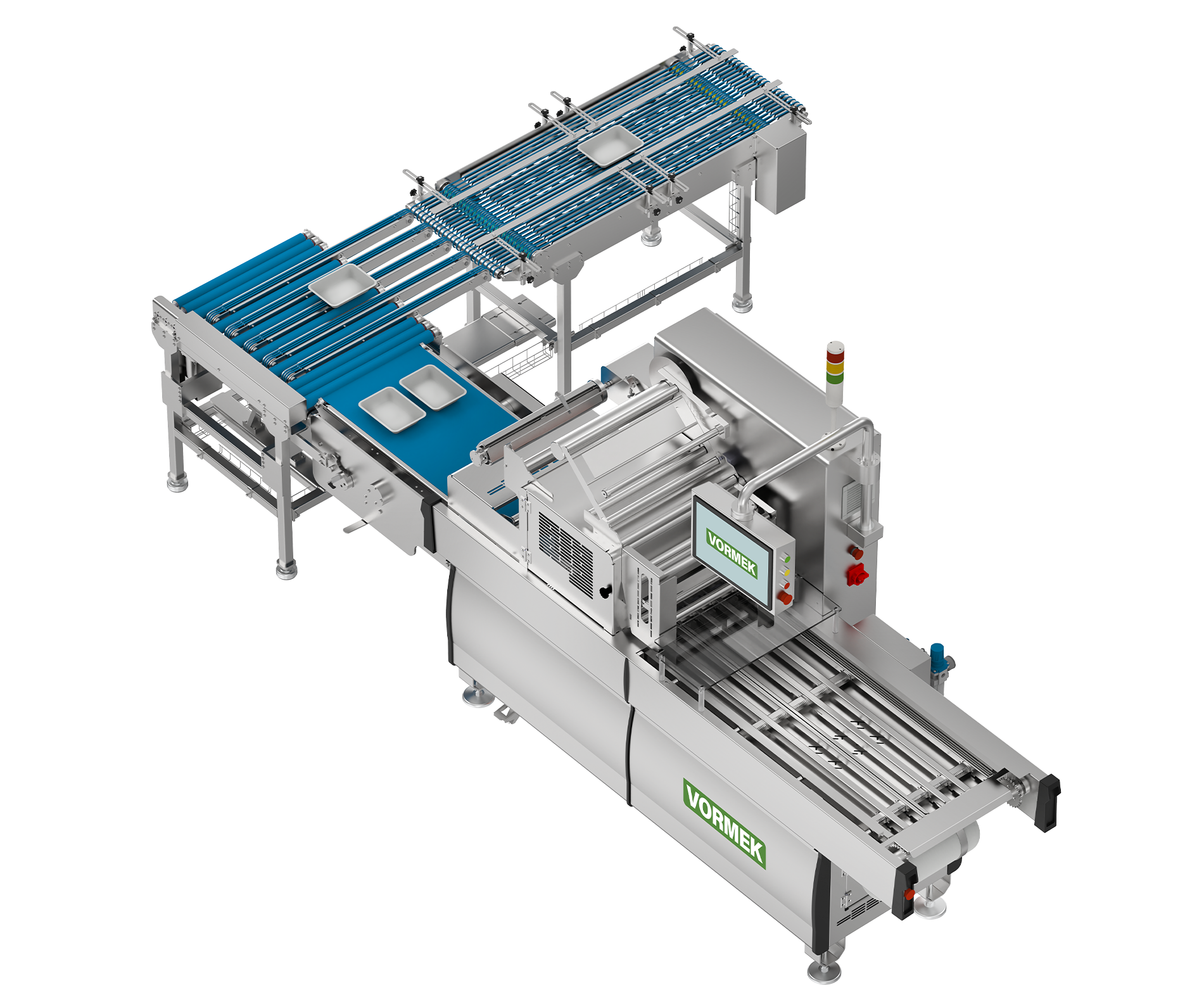
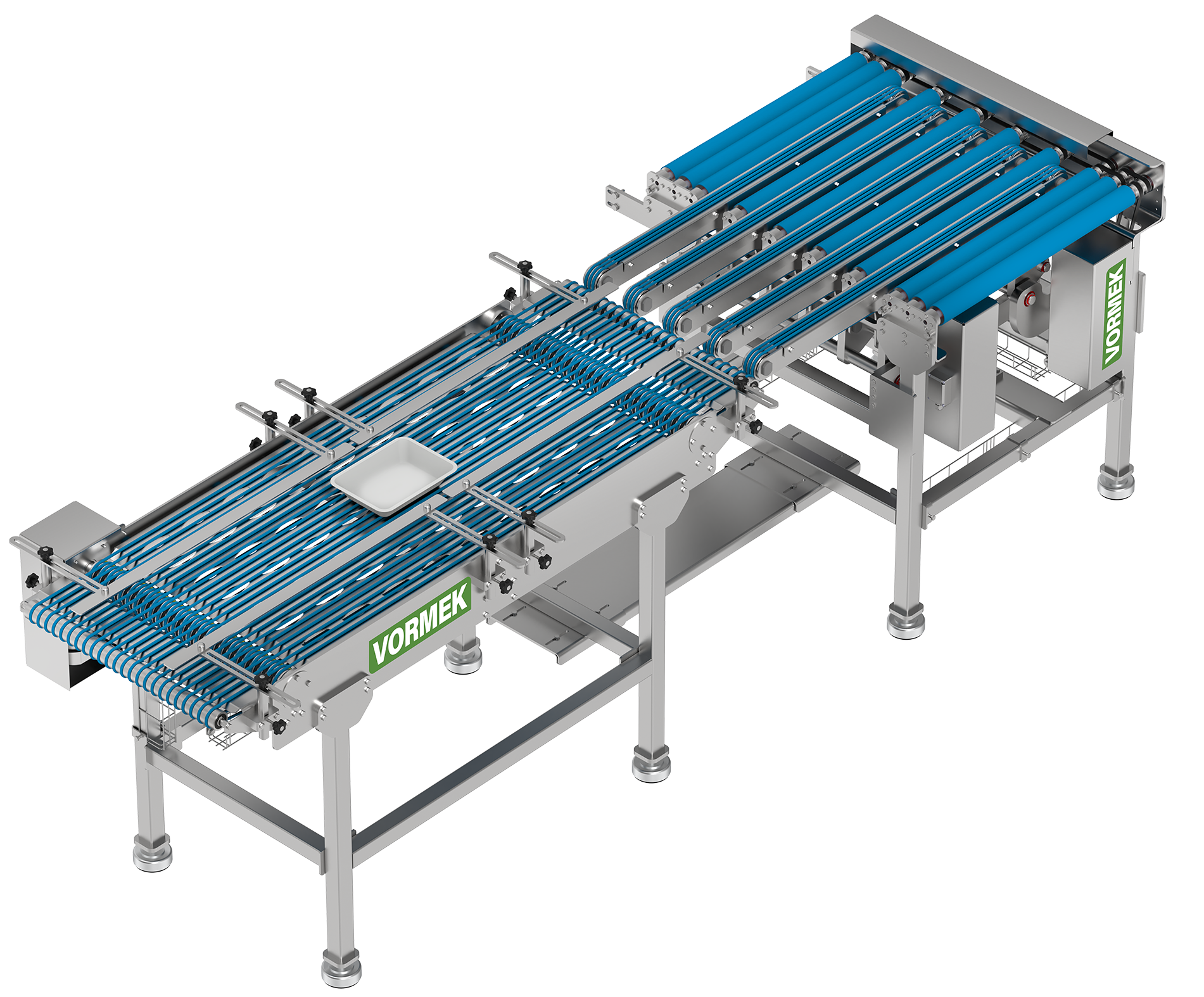
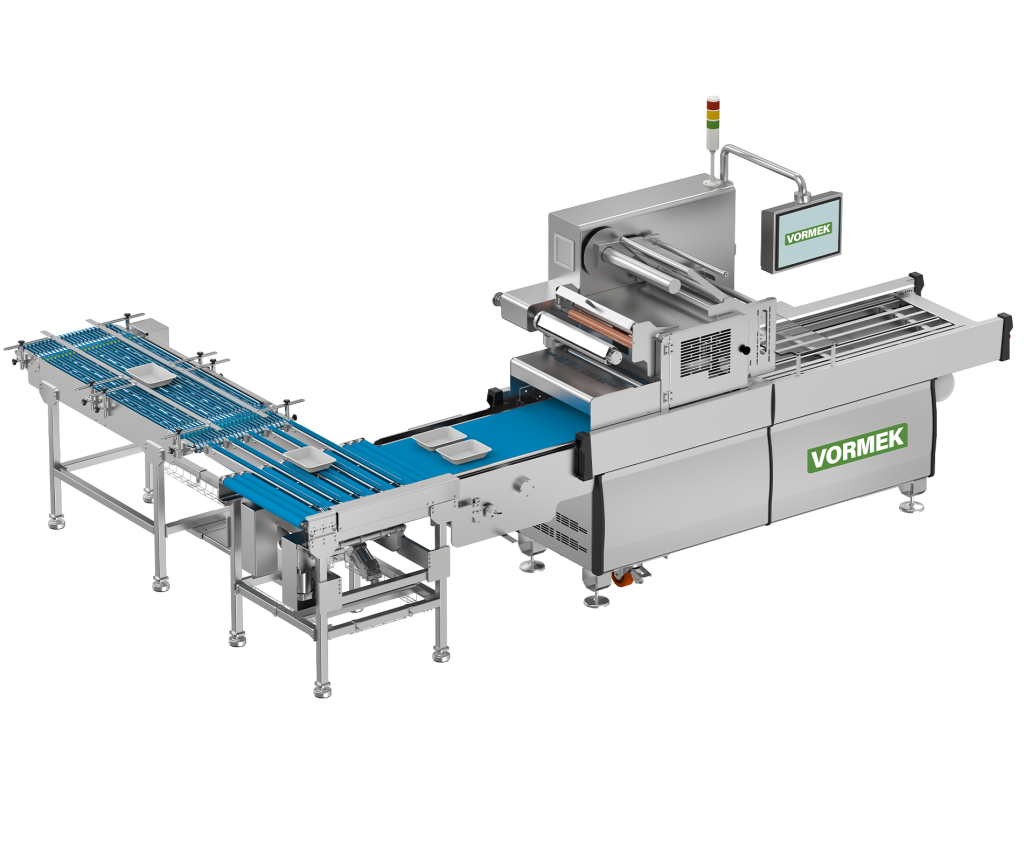
ItuKonversi VLM-500adalah solusi teknik canggih yang dikembangkan untuk mengatasi kedua tantangan secara bersamaan. Sistem ini dapat mengubah keluaran mesin pengemasan multi-jalur menjadi aliran satu file sekaligus mengarahkan pergerakan produk sebesar 90 derajat. Hasilnya: berkurangnya kebutuhan ruang lantai, penghapusan operasi manual, peningkatan produktivitas, dan landasan untuk otomatisasi jalur pengemasan yang lengkap.
Tantangan Industri – Biaya Tersembunyi dari Penggabungan Produk Manual
Di banyak lini produksi pangan, pemindahan hasil dari mesin pengemas ke peralatan hilir masih dilakukan secara semi-manual. Operator mengumpulkan produk dari beberapa jalur dan menempatkannya ke konveyor berikutnya dalam urutan satu file. Meskipun hal ini tampak sederhana, pada skala industri hal ini menimbulkan konsekuensi yang luas:
| Konsekuensi | Keterangan |
|---|---|
| Peningkatan biaya tenaga kerja | Diperlukan beberapa operator per shift |
| Ketergantungan saluran pada operator | Kinerja terkait dengan ketersediaan dan keterampilan operator |
| Kelelahan dan penurunan kualitas | Kinerja menurun pada jam kerja shift akhir |
| Kemacetan selama puncak produksi | Memperlambat keluaran saluran secara keseluruhan |
| Penghentian yang tidak direncanakan | Gangguan dari kesalahan penanganan manual |
| Mengurangi efisiensi peralatan hilir | Umpan yang tidak konsisten memengaruhi pelabel, printer, dan checkweigher |
| Peningkatan risiko kontaminasi | Kontak tangan dengan produk dan wadah |
Studi pada lini pengemasan menunjukkan bahwa sebagian besar penghentian lini dengan durasi pendek disebabkan oleh masalah transfer dan penyortiran produk.
Perbandingan Komprehensif Teknologi Penggabungan Jalur
| Kriteria | Penggabungan Sebaris | Penggabungan Manual (Operator) | Konversi VLM-500 |
|---|---|---|---|
| Dibutuhkan operator | TIDAK | Ya (setidaknya 1 per shift) | TIDAK |
| Perubahan arah 90° | TIDAK | Tidak (manual dan memakan waktu) | Ya (otomatis) |
| Konsistensi aliran | Tinggi | Keterampilan operator dan kelelahan tergantung | Sangat tinggi (dapat diulang) |
| Penyesuaian kecepatan | Ya (motor servo) | TIDAK | Ya (motor servo) |
| Pembersihan mudah | Ya | Terbatas (kontak tangan) | Ya (sabuk policord + baja tahan karat) |
| Konstruksi baja tahan karat penuh | Ya | TIDAK | Ya |
| Integrasi multi-jalur | Ya | TIDAK | Ya |
| Persyaratan ruang lantai | Tinggi | Sedang | Sangat rendah |
| Waktu pergantian | Sangat rendah | Tinggi | Sangat rendah |
| Biaya pemeliharaan jangka panjang | Sangat rendah | Hanya biaya tenaga kerja | Sangat rendah |
| Integrasi dengan peralatan otomatis | Penuh | Tidak ada | Penuh |
| Risiko kontaminasi silang | Sangat rendah | Tinggi | Sangat rendah |
Pemanfaatan Ruang – Kendala Manufaktur Baru
Salah satu keterbatasan paling signifikan di pabrik saat ini adalah ketersediaan ruang lantai. Meningkatnya biaya ekspansi berarti banyak fasilitas produksi tidak dapat memperluas lini pengemasannya dalam konfigurasi lurus. Desainer semakin beralih ke tata letak berbentuk L, berbentuk U, dan multi-jalur. Namun, mengubah arah aliran produk tanpa mengganggu urutan keluaran memerlukan peralatan khusus.
Solusi Teknik – Konsep Pop‑Up
Teknologi Converix dibangun berdasarkan prinsip rekayasa yang sederhana namun sangat efektif: pengalihan aliran produk yang terkontrol dikombinasikan dengan konvergensi multi-jalur menjadi satu jalur.
Berbeda dengan merger konvensional yang hanya melakukan konsolidasi jalur, VLM-500 secara bersamaan:
- Menerima keluaran multi-jalur
- Mengakomodasi berbagai ketinggian kontainer
- Mengarahkan aliran sebesar 90 derajat
- Memberikan output file tunggal
- Menyinkronkan kecepatan dengan peralatan hilir
Arsitektur Sistem
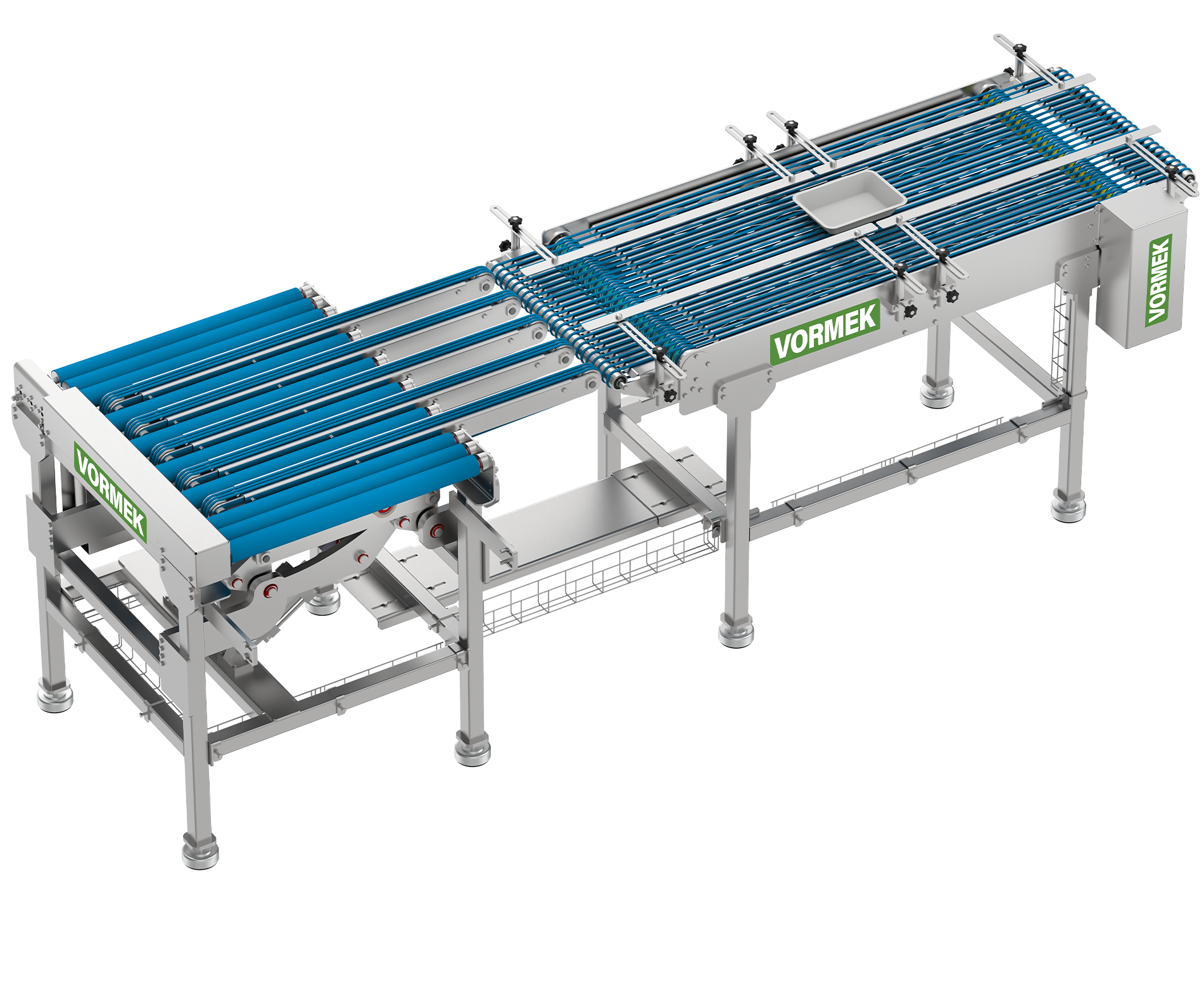
Modul Transfer Roller Utama
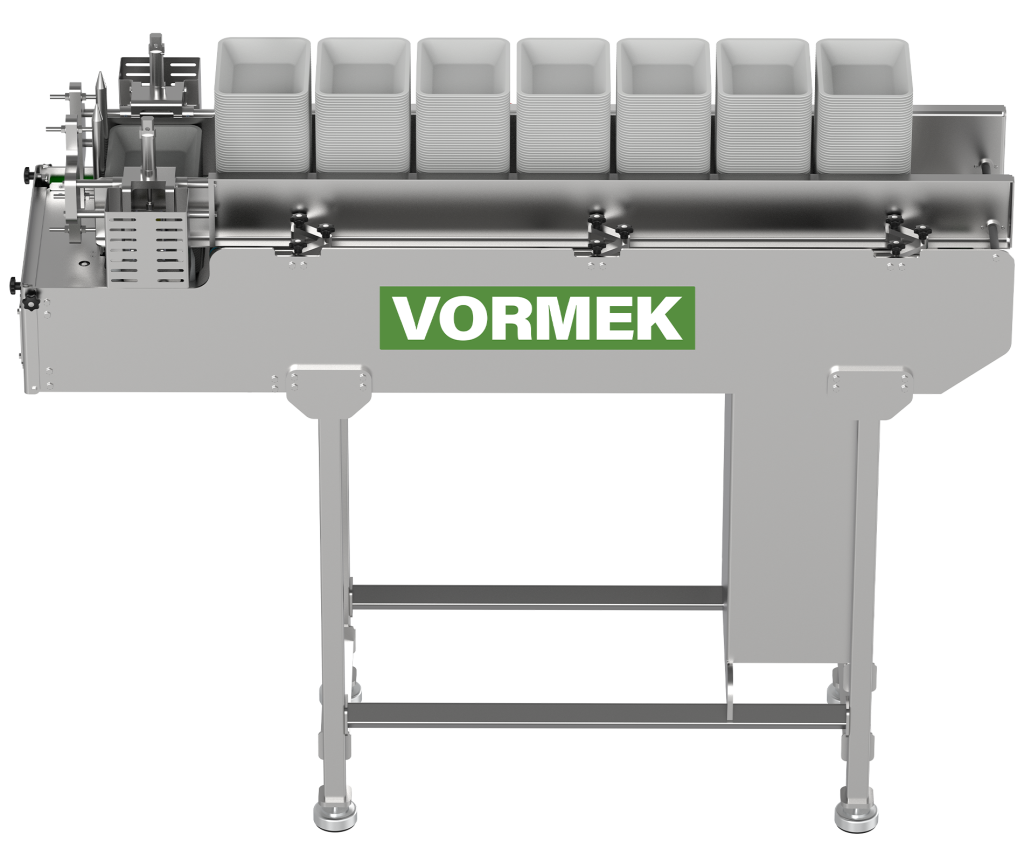
Bagian pertama diposisikan disepanjang pelepasan tray sealer. Ini fitur rol transfer yang menerima produk dari mesin. Mekanisme Pop-Up menurunkan produk sekitar 4–5 cm, memungkinkan perpindahan yang lancar dan terkendali ke jalur baru.
Modul Konveyor Polycord
Bagian kedua dilengkapi konveyor yang dilengkapi dengan sabuk Polycord. Teknologi ini menawarkan banyak keuntungan:
| Keuntungan | Keterangan |
|---|---|
| Gesekan yang terkendali | Gerakan halus dan tidak licin |
| Pemindahan produk dengan lembut | Cocok untuk wadah sensitif atau ringan |
| Keausan minimal | Umur sabuk Poliuretan yang panjang |
| Kemampuan mencuci yang tinggi | Tahan terhadap air dan deterjen |
| Drainase puing | Kontaminan berpindah antar belt dan tidak terakumulasi |
Rel pemandu yang dapat disesuaikan memastikan panduan produk yang tepat.
Teknologi Kontrol Gerak Servo
| # | Fitur Teknis | Manfaat Operasional |
|---|---|---|
| 1 | Kontrol loop tertutup dengan umpan balik encoder | Koreksi kesalahan posisi instan – tidak ada kesalahan selip atau gerakan |
| 2 | Kontrol akselerasi/deselerasi yang tepat | Gerakan halus dan bebas benturan – mencegah pergerakan atau tumpahan kontainer |
| 3 | Torsi tinggi pada RPM rendah | Pengoperasian kecepatan rendah tanpa getaran – cocok untuk produk sensitif |
| 4 | Respon dinamis tinggi | Berhenti dan mulai dengan cepat – ideal untuk lini dengan jarak produk yang sempit |
| 5 | Torsi terukur pada rentang kecepatan penuh | Penyesuaian kecepatan dari cm/s ke m/s tanpa kehilangan daya |
| 6 | Pengereman regeneratif | Penghematan energi 30–40% dibandingkan motor konvensional |
| 7 | Penyimpanan parameter gerak di drive | Penyiapan yang cepat dan dapat diulang – tidak perlu kalibrasi ulang |
| 8 | Deteksi dan pelaporan kesalahan otomatis | Diagnostik cepat – mengurangi waktu henti saluran |
Kemampuan Integrasi dengan Peralatan Hulu dan Hilir
| # | Kemampuan | Pelaksanaan | Keuntungan |
|---|---|---|---|
| 1 | Masukan tersinkronisasi dari penyegel baki | Sinkronisasi pulsa, sinyal digital, atau komunikasi industri | Pencocokan kecepatan otomatis – tidak ada penyesuaian manual |
| 2 | Output yang dapat disesuaikan untuk peralatan hilir | Sensor fotolistrik + pitch dan penundaan yang dapat disesuaikan | Menyiapkan wadah untuk pelabel, printer, dan sistem inspeksi |
| 3 | Penyimpanan resep | Minimal 10 resep (kecepatan, akselerasi, nada, penundaan) | Pergantian produk yang cepat < 5 menit – mengurangi waktu henti |
| 4 | Antarmuka komunikasi standar | Modbus TCP, Profinet, EtherCAT, Profibus, I/O Digital | Koneksi mudah ke PLC pusat dan SCADA – integrasi pabrik penuh |
| 5 | Tolak masukan sinyal dari sistem inspeksi | Input digital khusus untuk sinyal kesalahan | Penghapusan otomatis produk cacat – meningkatkan kualitas keluaran |
| 6 | Keluaran umpan balik status | Sinyal Siap dan Error ke PLC utama | Pemantauan waktu nyata – diagnostik jarak jauh |
| 7 | Koneksi ke kontrol pabrik pusat | Jaringan industri (Profinet / EtherCAT) | Pencatatan data produksi, pelaporan, dan pengoptimalan lini |
Kemampuan Operasional – VLM-500
| # | Operasi | Keterangan |
|---|---|---|
| 1 | Penerimaan input multi-jalur | Menerima produk dari 2, 3, atau 4 garis paralel |
| 2 | Perubahan arah 90° | Mengarahkan aliran produk ke kanan atau kiri |
| 3 | Keluaran file tunggal | Mengubah beberapa jalur menjadi satu garis teratur |
| 4 | Sinkronisasi kecepatan | Mencocokkan kecepatan peralatan hulu dan hilir |
Kemampuan Integrasi Multi-Line
Keuntungan utama VLM-500 adalah kemampuannya untuk mengintegrasikan beberapa jalur produksi. Di pabrik besar dengan sealer baki paralel:
- Setiap keluaran ditangani oleh unit Pop-Up independen
- Semua jalur bergabung menjadi satu jalur utama
Hal ini memungkinkan tata letak produksi yang sangat kompak dan berkapasitas tinggi.
Prinsip Desain Higienis
Semua bagian mesin dikembangkan sesuai dengan prinsip desain higienis industri makanan:
- Konstruksi baja tahan karat 304 penuh
- Kemampuan mencuci yang lengkap
- Ketahanan korosi
- Tidak ada titik perangkap kontaminasi
- Minimal kontak manusia dengan produk
Perbandingan Polycord vs. Sabuk Datar
| Fitur | Sabuk Datar | Sabuk Polikord – VLM-500 |
|---|---|---|
| Pergerakan kontainer | Halus, tapi mungkin tergelincir | Halus dan terkontrol |
| Penanganan puing | Puing-puing tertinggal di sabuk → kontaminasi wadah | Puing-puing lewat di antara sabuk |
| Pembersihan | Membutuhkan pelepasan sabuk sepenuhnya | Pembersihan di tempat yang mudah |
| Kepatuhan kontak makanan | Membutuhkan sertifikasi Food Grade | Kelas Makanan Standar |
| Pemeliharaan | Membutuhkan penyesuaian ketegangan secara berkala | Ketegangan otomatis |
| Jangka hidup | Sedang | Tinggi |
| Ketahanan terhadap kelembaban dan deterjen | Sedang | Tinggi |
Skenario Aplikasi
| Skenario | Keterangan | Manfaat Utama |
|---|---|---|
| Garis tunggal dengan batasan panjang | Tidak ada ruang untuk tata letak peralatan lurus | perubahan arah 90°; Tata letak berbentuk L |
| Sealer baki dengan keluaran 3 jalur | Outputnya adalah 3 jalur; harus dikonversi ke file tunggal | Penggabungan jalur + perubahan arah secara bersamaan |
| Pabrik dengan 2 sealer baki paralel | Dua mesin berdampingan; keluarannya harus terpadu | Menggabungkan dua keluaran menjadi satu aliran tunggal |
| Pabrik dengan 3–4 sealer baki paralel | Beberapa lini pengemasan harus menyatu untuk menghasilkan keluaran yang sama | Kemampuan integrasi multi-jalur |
| Garis yang perlu sering dibersihkan | Produk yang lengket atau mudah tumpah mencemari konveyor | Sabuk policord dengan kemampuan melewati serpihan |
Pertanyaan Umum Teknis
| Pertanyaan | Menjawab |
|---|---|
| Berapa lebar maksimum kontainer yang diterima? | Tergantung pada konfigurasi; dapat disesuaikan. Silakan berkonsultasi dengan tim teknis. |
| Bisakah mesin disesuaikan untuk ketinggian kontainer yang berbeda? | Ya. Rel pemandu dan ketinggian dapat disesuaikan. |
| Bisakah mesin terhubung ke PLC pusat pabrik? | Ya. Dilengkapi dengan antarmuka komunikasi industri standar. |
| Apakah suku cadang tersedia di Iran? | Ya. Vormek menyediakan pasokan suku cadang lokal. |
| Berapa masa garansinya? | 12 bulan (dapat diperpanjang). |