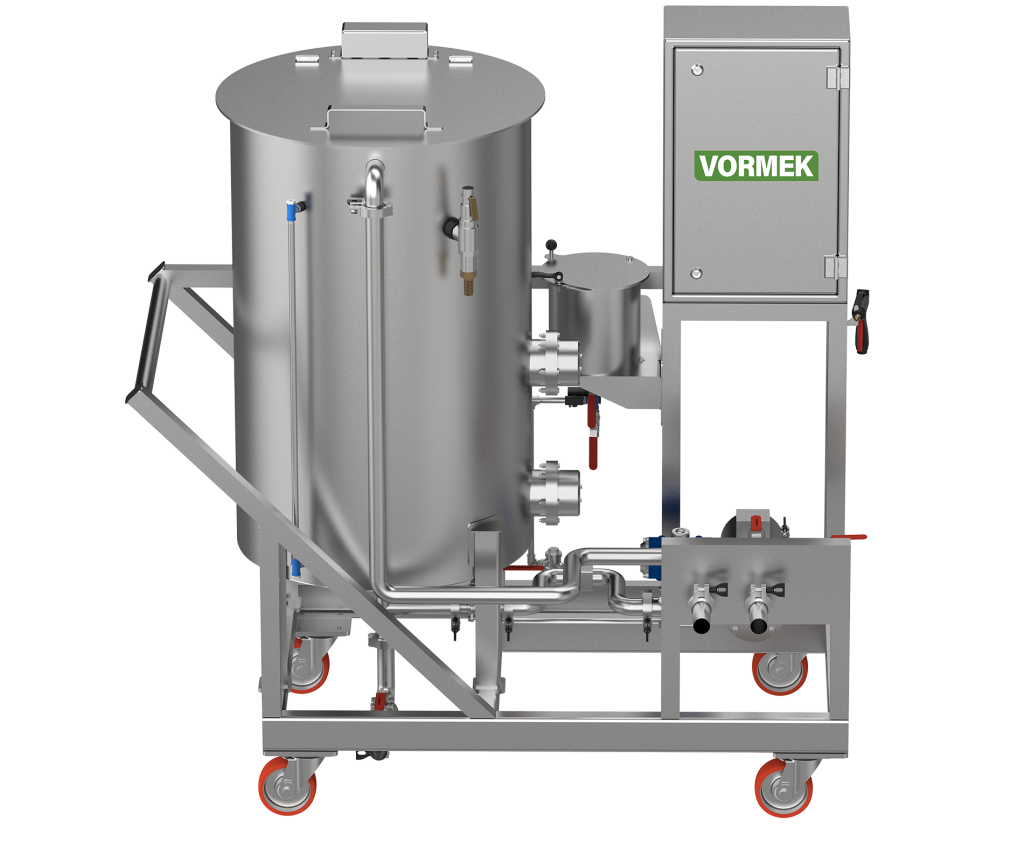
Pengenalan VORMEK Clean VCP-500
Dalam industri makanan, bahan pengisi adalah salah satu peralatan paling penting di lini produksi—karena bahan pengisi bersentuhan langsung dengan produk akhir. Kontaminasi atau residu apa pun yang tertinggal pada peralatan ini dapat menyebabkan pembusukan, penurunan kualitas, dan bahkan risiko kesehatan konsumen.
Clean-In-Place (CIP) adalah metode yang higienis, otomatis, dan efisien untuk membersihkan permukaan internal peralatan seperti bahan pengisi dan komponen terkait—tanpa perlu pembongkaran atau penanganan manual.
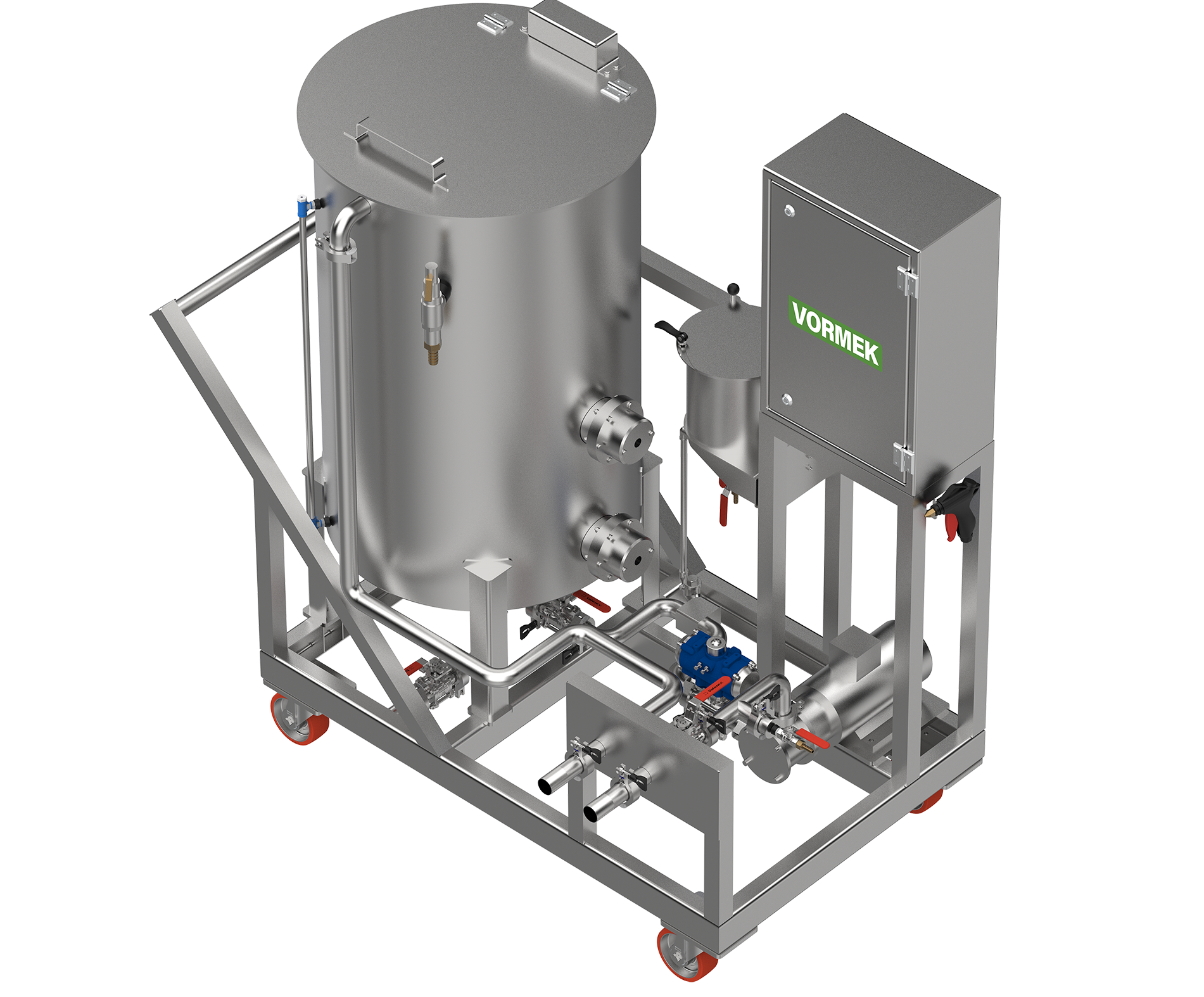
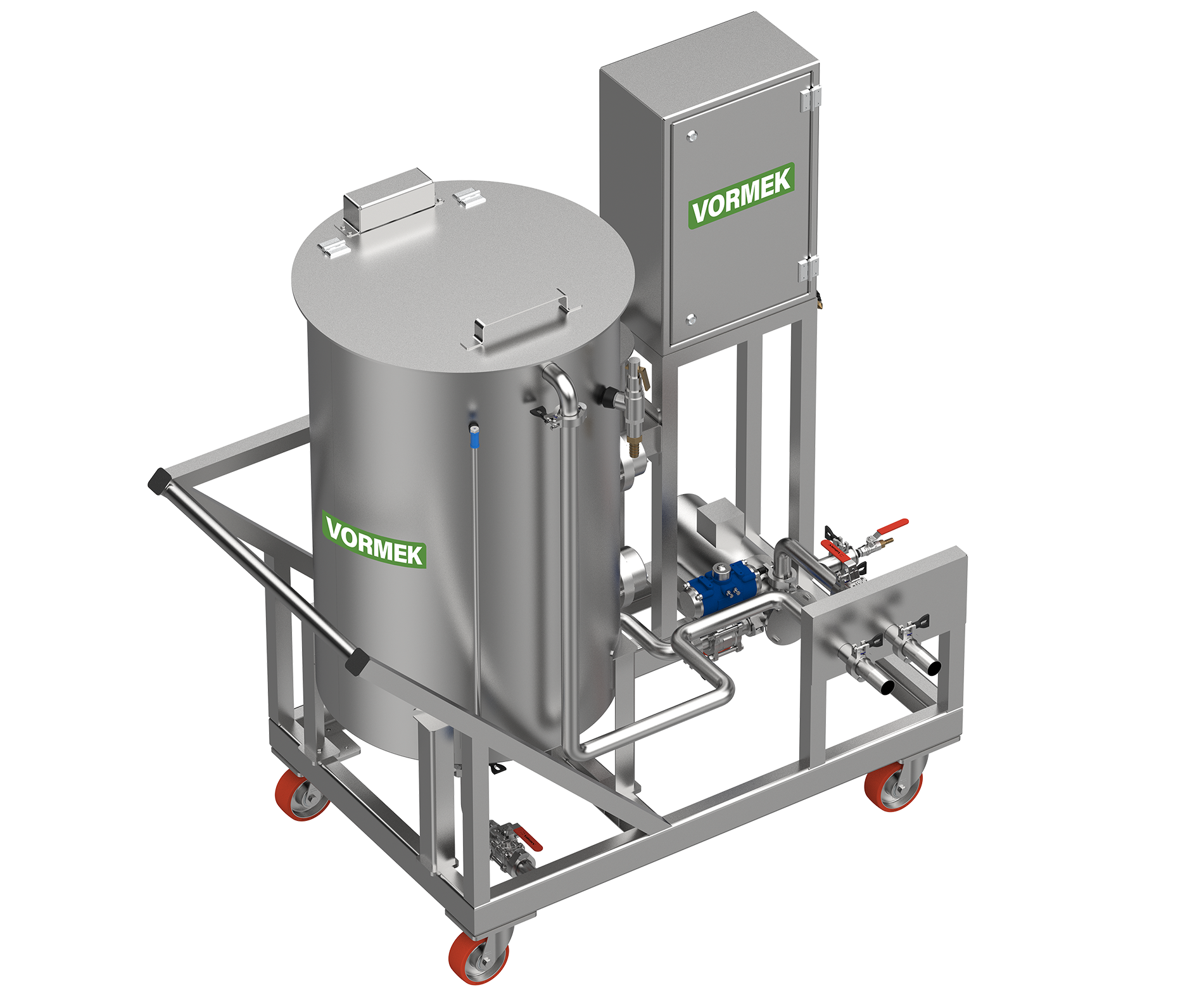
ItuVORMEK Bersihkan VCP-500adalah solusi CIP yang cerdas, sepenuhnya otomatis, dan dapat diprogram yang dirancang khusus untuk membersihkan mesin pengisi. Dibuat untuk mematuhi standar ISO 22000, HACCP, dan FDA, produk ini memberikan kebersihan yang unggul sekaligus mengurangi biaya operasional.
Peran Penting Kebersihan Filler
Mesin pengisi Vormek bersentuhan langsung dengan produk akhir. Bahkan kontaminasi atau residu kecil pun dapat menimbulkan konsekuensi serius:
| Konsekuensi | Keterangan |
|---|---|
| Pertumbuhan mikroba | Sisa makanan menciptakan lingkungan yang ideal bagi bakteri, jamur, dan ragi |
| Pembusukan produk | Perubahan rasa, bau, warna, dan tekstur dalam waktu singkat |
| Degradasi kualitas | Produksi yang tidak konsisten dan hilangnya standar kualitas |
| Risiko kesehatan konsumen | Risiko penyakit bawaan makanan akibat kontaminasi mikroba |
| Pengembalian produk | Menolak pengiriman dari pelanggan dan pengecer |
| Kerusakan merek | Hilangnya kepercayaan konsumen dan reputasi merek |
Pembersihan pengisi secara menyeluruh dan menyeluruh bukanlah suatu pilihan—ini adalah suatu keharusan.
Apa itu Clean‑In‑Place (CIP)?
CIP adalah metode otomatis untuk membersihkan permukaan internal pengisi dan peralatan terkait—tanpa pembongkaran atau penanganan manual. Dalam proses ini, larutan pembersih, air panas, dan pembersih disirkulasikan melalui jalur internal peralatan dengan tekanan dan suhu terkendali, sehingga membersihkan semua permukaan yang bersentuhan dengan produk.
ItuVORMEK Bersihkan VCP-500adalah sistem CIP yang cerdas dan sepenuhnya otomatis yang dirancang khusus dan dioptimalkan untuk mesin pengisi Vormek.
Keuntungan Utama
1. Keamanan & Kebersihan Produk
| Tantangan | Solusi CIP |
|---|---|
| Residu lemak, protein, gula, dan endapan mineral | Penghapusan total dengan larutan pembersih khusus |
| Kontaminasi mikroba (bakteri, jamur, ragi) | Disinfeksi dengan bahan yang efektif pada suhu terkendali |
| Penumpukan kontaminasi di zona mati | Jalur CIP dirancang untuk cakupan permukaan penuh |
Hasil:Produk yang aman dan berkualitas tinggi dengan umur simpan yang lebih lama.
2. Pencegahan Kontaminasi Silang
Di lini produk yang mengemas produk berbeda secara berurutan (misalnya mayones di pagi hari, saus barbekyu di sore hari, dan salad di malam hari), pembersihan yang tidak menyeluruh menimbulkan risiko kontaminasi silang.
Larutan:Protokol pembersihan multi-tahap dan presisi (pra-bilas → pencucian kaustik → pembilasan antara → pencucian asam → pembilasan akhir → sanitasi opsional), dengan resep pembersihan yang disimpan dan dapat ditarik kembali untuk setiap jenis produk. Produksi berlangsung tanpa mempedulikan rasa, bau, atau kontaminasi silang alergen antar produk yang berbeda.
3. Peningkatan Produktivitas & Mengurangi Waktu Henti
| Metode Manual | Metode CIP |
|---|---|
| Membutuhkan penghentian jalur sepenuhnya | Membersihkan pada waktu yang dijadwalkan (misalnya, akhir shift) |
| Memakan waktu (jam) | Cepat (30–60 menit) |
| Membutuhkan pembongkaran | Tidak perlu pembongkaran |
| Risiko kerusakan komponen selama pembongkaran | Tidak ada kontak fisik |
| Bergantung pada keterampilan operator | Sepenuhnya otomatis dan konsisten |
Waktu henti jalur diminimalkan, memaksimalkan waktu produktif.
4. Efisiensi Sumber Daya
Sistem CIP modern menampilkan resirkulasi larutan pembersih, air, dan bahan kimia. Penghematan meliputi:
- Air– Pemulihan dan penggunaan kembali
- Bahan kimia pembersih– Konsentrasi yang dioptimalkan dan terkontrol
- Energi– Pemulihan panas dari air panas
Manfaat tambahan: Mengurangi biaya operasional (air, listrik, bahan kimia), konservasi sumber daya alam, dan mengurangi dampak lingkungan dan air limbah.
5. Mengurangi Tenaga Kerja & Penghapusan Kesalahan Manusia
| Metode Manual | Metode CIP |
|---|---|
| Membutuhkan operator terampil untuk pembongkaran | Satu operator untuk pemantauan dan startup |
| Risiko kontaminasi akibat kesalahan manusia | Semua tahapan dikendalikan oleh PLC |
| Pembersihan yang tidak konsisten (kelelahan, kurang perhatian) | Operasi yang seragam dan berulang |
| Pelatihan yang memakan waktu bagi operator baru | Operasi HMI sederhana |
DiVORMEK Bersihkan VCP-500, semua parameter (suhu, tekanan, waktu, konsentrasi bahan kimia) dikontrol oleh PLC—memastikan presisi tinggi dan hasil yang konsisten. Pembersihan menyeluruh dijamin, terlepas dari keterampilan atau kelelahan operator.
6. Kepatuhan terhadap Standar Internasional
ItuVORMEK Bersihkan VCP-500dirancang untuk memenuhi persyaratan:
- ISO 22000– Manajemen keamanan pangan
- HACCP– Analisis bahaya dan titik kontrol kritis
- FDA– Standar kebersihan Badan Pengawas Obat dan Makanan AS
- EHEDG– Pedoman Grup Desain & Rekayasa Higienis Eropa
Kesiapan penuh untuk audit internal dan eksternal, memfasilitasi ekspor produk.
Cara Kerja VORMEK Clean VCP-500
ItuVORMEK Bersihkan VCP-500adalah sistem CIP multi-tahap cerdas yang melakukan urutan pembersihan berikut:
| Panggung | Agen Pembersih | Tujuan Utama | Jenis Kontaminan | Alasan Teknis |
|---|---|---|---|---|
| 1 | Air (Pra-Bilas) | Pra-pembersihan; menghilangkan sisa produk yang tersisa | Partikel tersuspensi, residu produk, bahan yang larut dalam air | Menghilangkan kontaminasi massal sebelum bahan kimia masuk; meningkatkan efektivitas tahapan selanjutnya; mengurangi konsumsi bahan kimia |
| 2 | Larutan Kaustik (NaOH) | Menghilangkan kontaminan organik | Lemak, protein, minyak, gula lengket, sisa makanan | Memecah lemak dan protein; melarutkan endapan organik; tahap paling penting dalam pembersihan industri makanan |
| 3 | Bilas Menengah | Menghilangkan residu kaustik | Residu alkali | Mencegah reaksi kimia antara kaustik dan asam; melindungi peralatan dari potensi korosi |
| 4 | Larutan Asam | Menghilangkan deposit mineral | Batu susu, kalsium, magnesium, besi, skala kesadahan air | Melarutkan deposit mineral; sangat penting dalam operasi produk susu, minuman, dan air sadah |
| 5 | Bilas Terakhir | Menghilangkan residu kimia | Residu asam dan deterjen | Memastikan tidak ada bahan kimia yang tertinggal di jalur produksi; peralatan siap produksi |
| 6 (Opsional) | Sanitasi | Mengurangi beban mikroba | Bakteri, ragi, jamur, mikroorganisme | Digunakan di lini produk susu, farmasi, dan minuman yang memerlukan tingkat kebersihan lebih tinggi |
Mengapa Menggunakan Kaustik dan Asam?
Dari sudut pandang rekayasa pangan, tidak ada satu pun bahan pembersih yang dapat menghilangkan semua jenis kontaminasi:
| Jenis Kontaminan | Agen Pembersih Terbaik |
|---|---|
| Lemak dan minyak | Kaustik (NaOH) |
| Protein | Kaustik (NaOH) |
| Gula dan organik | Kaustik (NaOH) |
| Skala kalsium dan magnesium | Asam |
| Batu susu | Asam |
| Skala air sadah | Asam |
Kaustik menghilangkan kontaminan organik. Asam menghilangkan kontaminan mineral. Kombinasi ini memastikan semua permukaan yang bersentuhan dengan produk dibersihkan secara menyeluruh dan siap produksi.
Dalam sistem CIP standar sepertiVORMEK Bersihkan VCP-500, urutannya adalah:Air → Kaustik → Air → Asam → Air → Sanitasi (jika diperlukan).
Urutan ini memastikan:
- Penghapusan total residu produk
- Penghapusan deposit organik dan mineral
- Mengurangi beban mikroba pada peralatan
- Peningkatan kualitas produk akhir dan umur simpan
- Kepatuhan terhadap HACCP, ISO 22000, dan persyaratan industri makanan
- Meminimalkan risiko kontaminasi silang
Nilai Bisnis & ROI
| # | Manfaat Ekonomi | Keterangan |
|---|---|---|
| 1 | Mengurangi waktu henti saluran | Pembersihan cepat dan otomatis → waktu lebih produktif |
| 2 | Mengurangi biaya tenaga kerja | Satu operator untuk pemantauan, bukan banyak operator untuk pembersihan manual |
| 3 | Mengurangi konsumsi air dan bahan kimia | Sirkulasi ulang dan penggunaan yang optimal → biaya pengoperasian lebih rendah |
| 4 | Mengurangi limbah dan pengembalian produk | Pembersihan menyeluruh → penghapusan kontaminasi, umur simpan lebih lama |
| 5 | Umur peralatan yang diperpanjang | Pembersihan yang benar tanpa kerusakan fisik pada komponen |
| 6 | Ekspor yang difasilitasi | Kepatuhan dengan standar internasional |
Investasi CIP biasanya menghasilkan ROI dalam waktu kurang dari 12 bulan.
Mengapa Memilih VORMEK Bersih VCP-500?
| # | Alasan |
|---|---|
| 1 | Dirancang khusus untuk mesin pengisi Vormek → kompatibilitas penuh |
| 2 | Kontrol PLC cerdas dengan HMI layar sentuh → ramah operator |
| 3 | Resep pembersihan tersimpan untuk berbagai produk |
| 4 | Konsumsi air, energi, dan bahan kimia yang dioptimalkan → pengurangan biaya |
| 5 | Kepatuhan penuh dengan standar ISO 22000, HACCP, dan FDA |
| 6 | Dukungan teknis dalam negeri dan layanan purna jual |
Ringkasan
Penggunaan sistem CIP untuk mesin pengisi bukanlah pilihan teknis—tetapi merupakan kebutuhan higienis dan ekonomis untuk setiap operasi produksi pangan.
Mengapa Memilih VORMEK Bersih VCP-500:
- Memastikan produksi produk yang aman dan berkualitas tinggi (menghilangkan kontaminasi mikroba dan bahan kimia)
- Mencegah kontaminasi silang antar produk yang berbeda
- Meningkatkan produktivitas dengan mengurangi waktu henti jalur
- Menghemat air, energi, dan bahan kimia pembersih
- Mengurangi ketergantungan tenaga kerja dan menghilangkan kesalahan manusia
- Sesuai dengan standar internasional (ISO 22000, HACCP, FDA)